Featured
May 11, 2026

Thanking nurses for a lifetime of care

A collage of a diverse group of nurses and patient interactions.

During Nursing Week 2026, we are honouring the vital role nurses play in supporting patients across every stage of life. 

This year’s theme, A Lifetime of Care, acknowledges the meaningful impact nurses make by being present for life’s milestones, through moments of joy, challenge and vulnerability. 
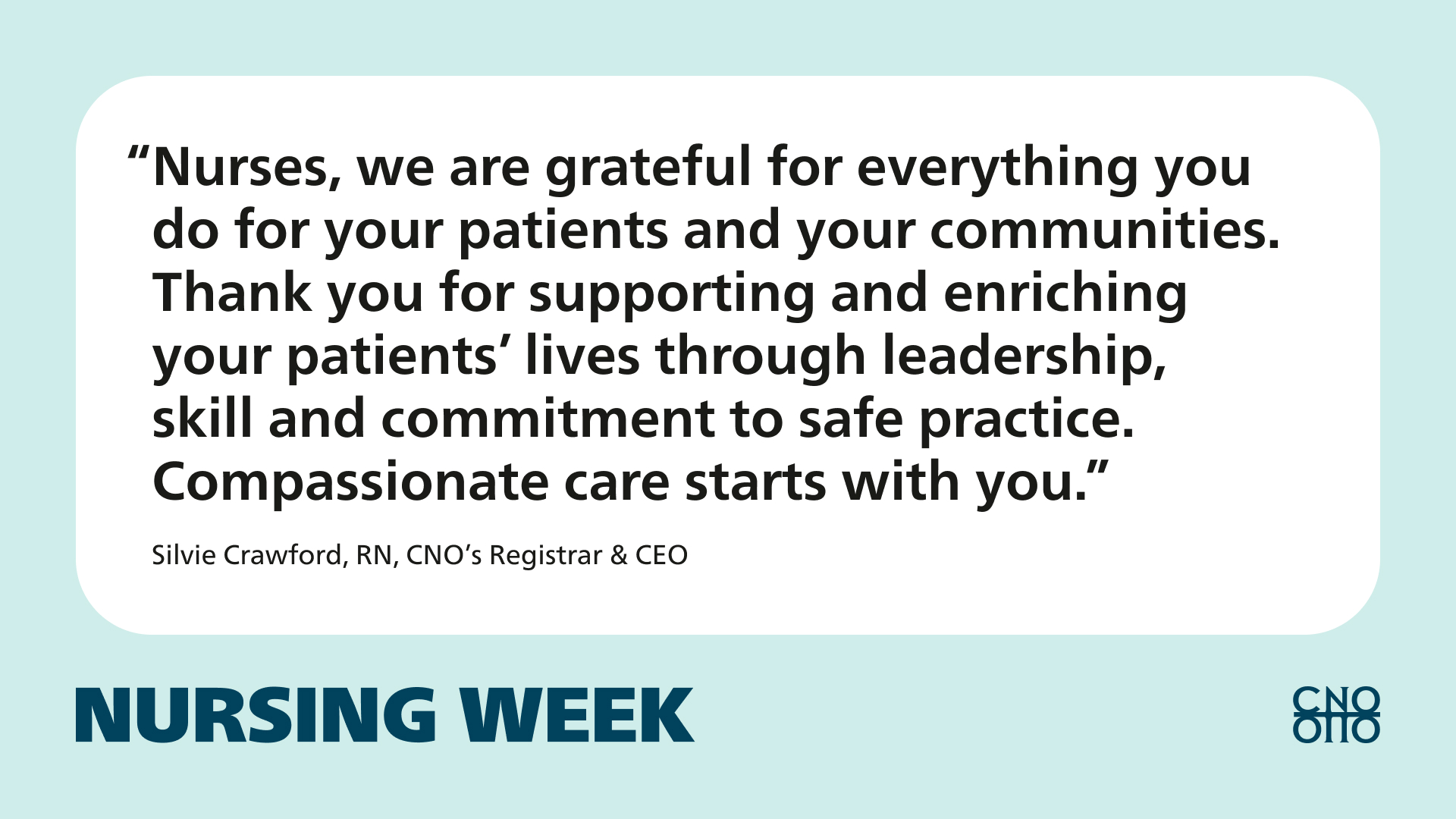
Silvie Crawford, RN, CNO's Registrar & CEO


Throughout Nursing Week, we will share patient stories that reflect the strength, care and support nurses provide to patients and their loved ones during pivotal life moments.

For example, Graciano Claro, who, since 2022, has been receiving care at Sunnybrook’s Odette Cancer Centre after receiving a life-changing cancer diagnosis. 
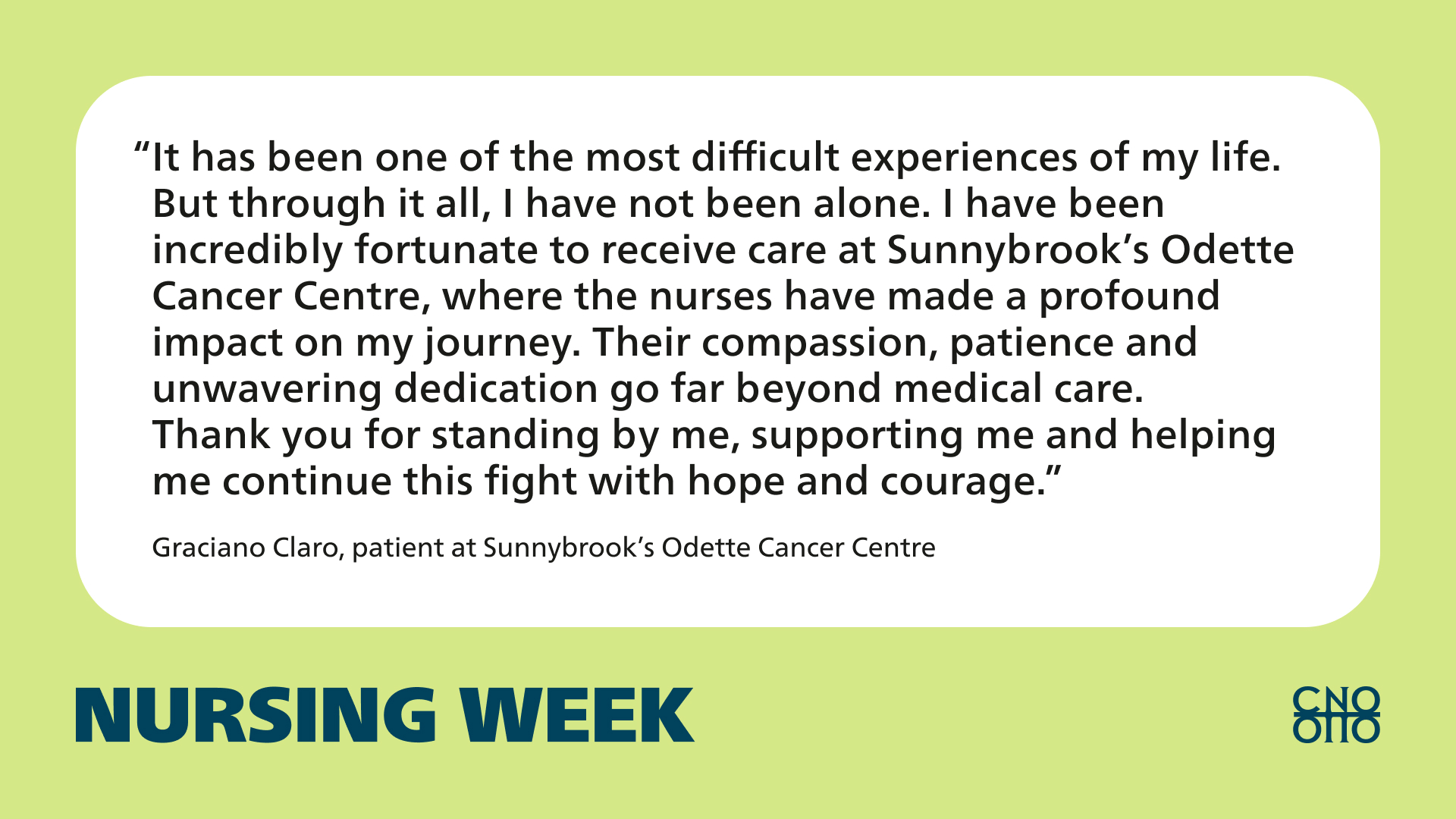
Graciano Claro, patient at Sunnybrook's Odette Cancer Centre


Every day, nurses go above and beyond in caring for their patients. By sharing personal stories from patients across Ontario, CNO is highlighting the lasting and transformative impact nurses have on individuals, families and communities. 
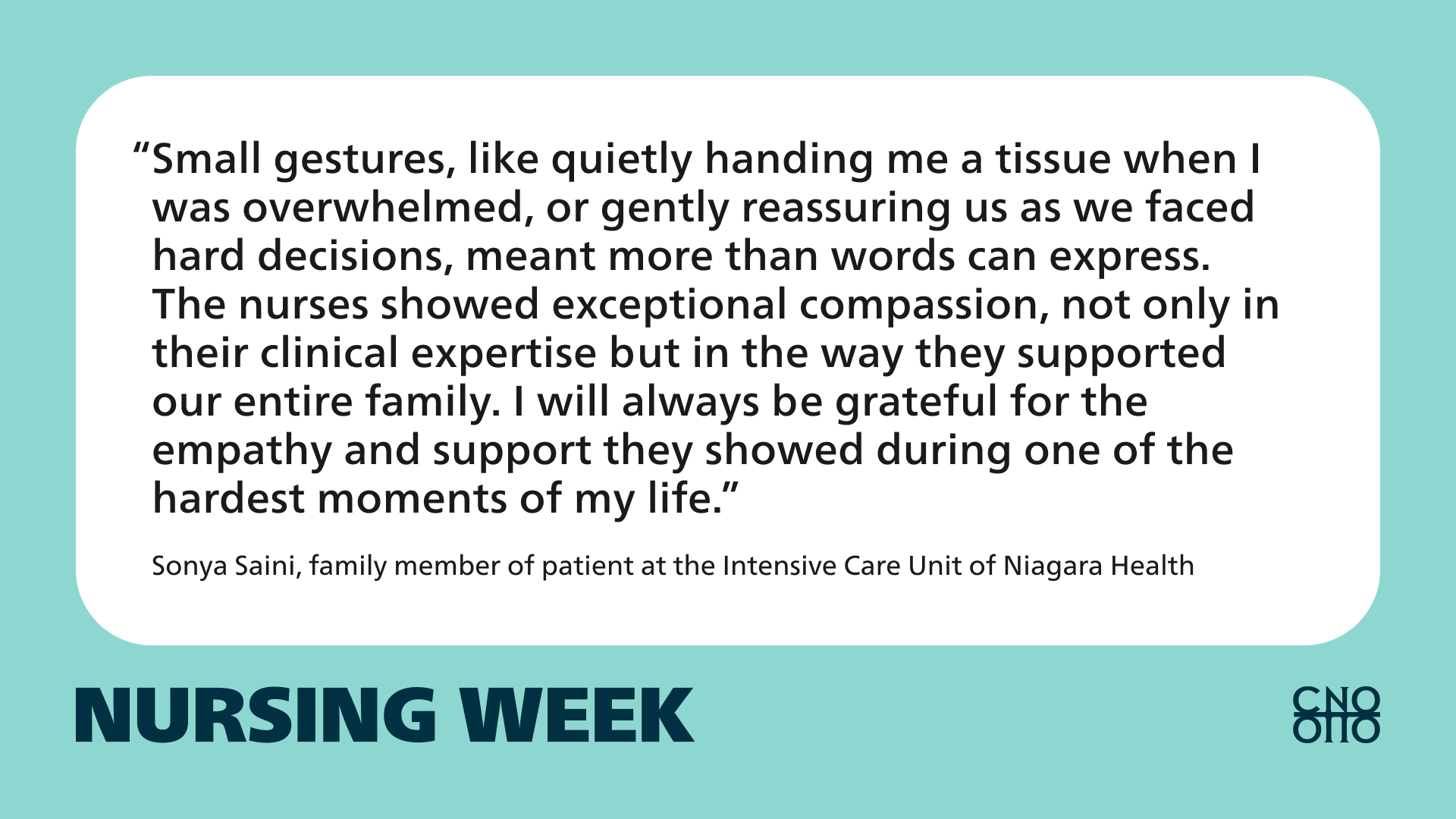
 

Sonya Saini, family member of patient at the Intensive Care Unit of Niagara Health

From trying moments to those of joy – nurses are there to bear witness and to provide compassionate care and steady support through it all. Giuliana Tarini, who was recently cared for at Mississauga Hospital, shared a personal reflection inspired by her grandmother’s nursing career. 
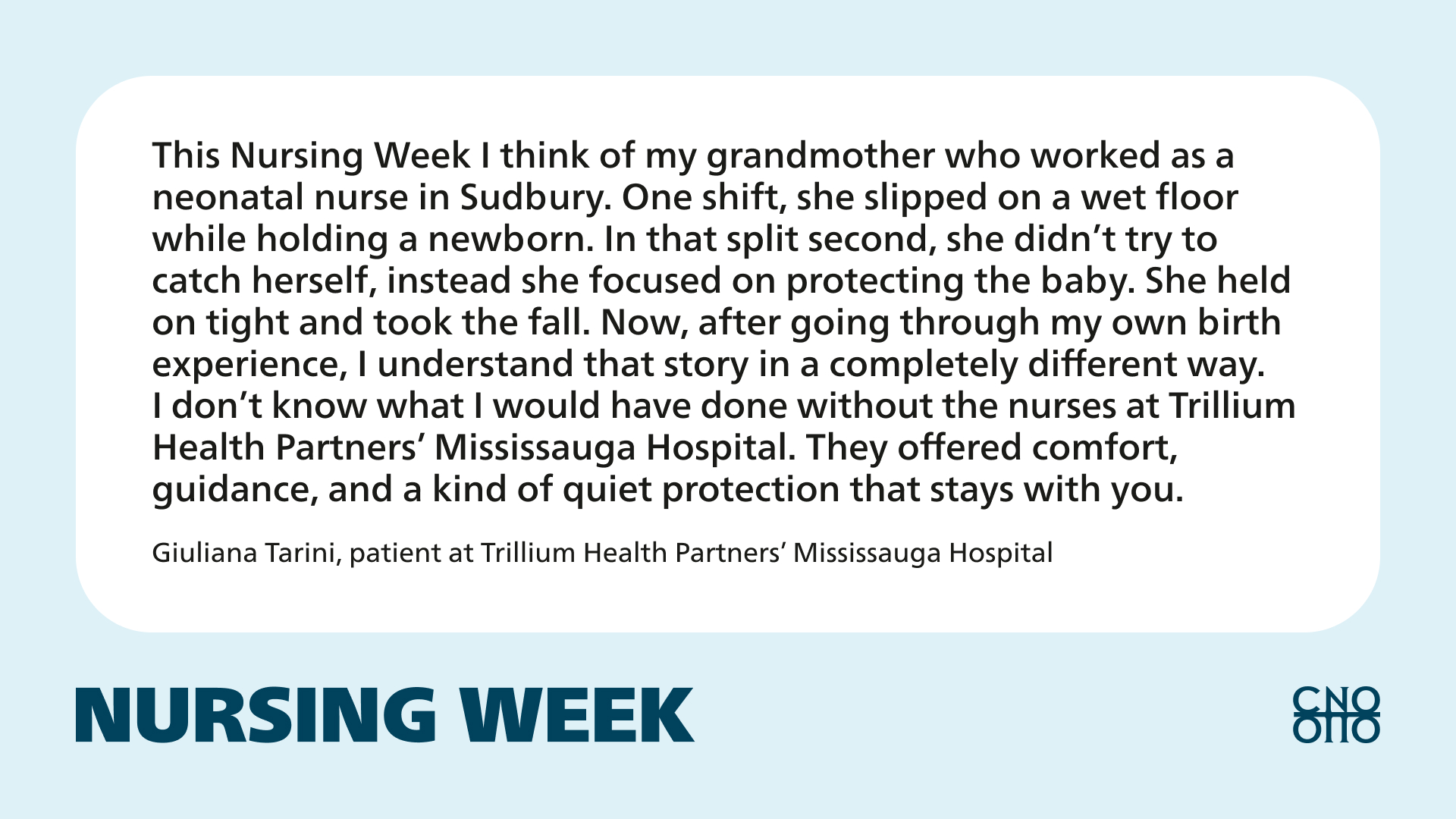
Giuliana Tarini, patient at Trillium Health Partners' Mississauga Hospital

Nursing Week 2026 takes place from Monday, May 11 to Sunday, May 17. We invite everyone to join us in recognizing the meaningful contributions nurses make to the health care system and to patients’ wellbeing.  

Celebrate with us! Visit www.cno.org/NursingWeek and follow CNO on Facebook, LinkedIn, YouTube and Instagram to hear stories from patients and the impact a nurse has had on their life.

About CNO

The College of Nurses of Ontario (CNO) is the regulator of the nursing profession in Ontario. It is not a school or a nursing association. CNO acts in the public interest by:

  • assessing qualifications and registering individuals who want to practice nursing in Ontario.
  • setting the practice standards of the profession that nurses in Ontario are expected to meet.
  • promoting nurses' continuing competence through a quality assurance program.
  • holding nurses accountable to those standards by addressing complaints or reports about nursing care.

The College was founded in 1963. By establishing the College, the Ontario government was acknowledging that the nursing profession had the ability to govern itself and put the public's well-being ahead of professional interests.

For the latest information, please see our Nursing Statistics page.

Anyone who wants to use a nursing-related title — Registered Nurse (RN), Registered Practical Nurse (RPN) or Nurse Practitioner (NP) must become a member of CNO.

Frequently Asked Questions

Go to the public Register, Find a Nurse, to conduct a search for the nurse. Contact us if you can't find the person you are looking for.

All public information available about nurses is posted in the public Register, Find a Nurse, which contains profiles of every nurse in Ontario. Publicly available information about nurses include their registration history, business address, and information related to pending disciplinary hearings or past findings.

Unregistered practitioners are people who are seeking employment in nursing or holding themselves out as being able to practice nursing in Ontario, but who are not qualified to do so. They are not registered members of CNO. Only people registered with CNO can use nursing-related titles or perform certain procedures that could cause harm if carried out by a non-registered health professional. CNO takes the issue of unregistered practitioners seriously. See Unregistered Practitioners for more information.

To ensure procedural fairness for both the patient (or client) and the nurse, the Regulated Health Professions Act requires that information gathered during an investigation remain confidential until the matter is referred to the Discipline Committee or Fitness to Practise Committee. CNO will not disclose any information that could identify patients (or clients) or compromise an investigation. See Investigations: A Process Guide for more information.

Information obtained during an investigation will become public if the matter is referred to a disciplinary hearing. If a complaint is not referred to a hearing, no information will be available publicly.

See CNO's hearings schedule, which is updated as hearing dates are confirmed. Hearings at CNO are open to the public and the media. For details on how to attend a hearing, contact the Hearings Administration Team.

A summary of allegations and the disciplinary panel outcomes can be found on the public Register, Find a Nurse. Full decisions and reasons are also available.

Where a disciplinary panel makes a finding of professional misconduct, they have the authority to reprimand a nurse, and suspend or revoke a nurse's registration. Terms, conditions and limitations can also be imposed on a nurse's registration, which restricts their practice for a set period. Nurses can also be required to complete remedial activities, such as reviewing CNO documents and meeting with an expert, before returning to practice.

For detailed information see the Sexual Abuse Prevention section.

Related links